Tips about the sexual exploitation of children often arrive with almost nothing attached: a username, a phone number, an email address. Before anyone can act, someone has to answer a basic question: who is actually behind it? This is one investigation we ran alongside a child protection organisation. It began with a single Gmail address and nothing else, and we ran it through Seer alone, with Arachne and Kraken switched off.
Everything that could identify the subject is blurred: the address, the name, the date of birth, the places and the text of anything they wrote. The findings went to the organisation we worked with; what we show here is how the case was built, not who it is about.
Starting point
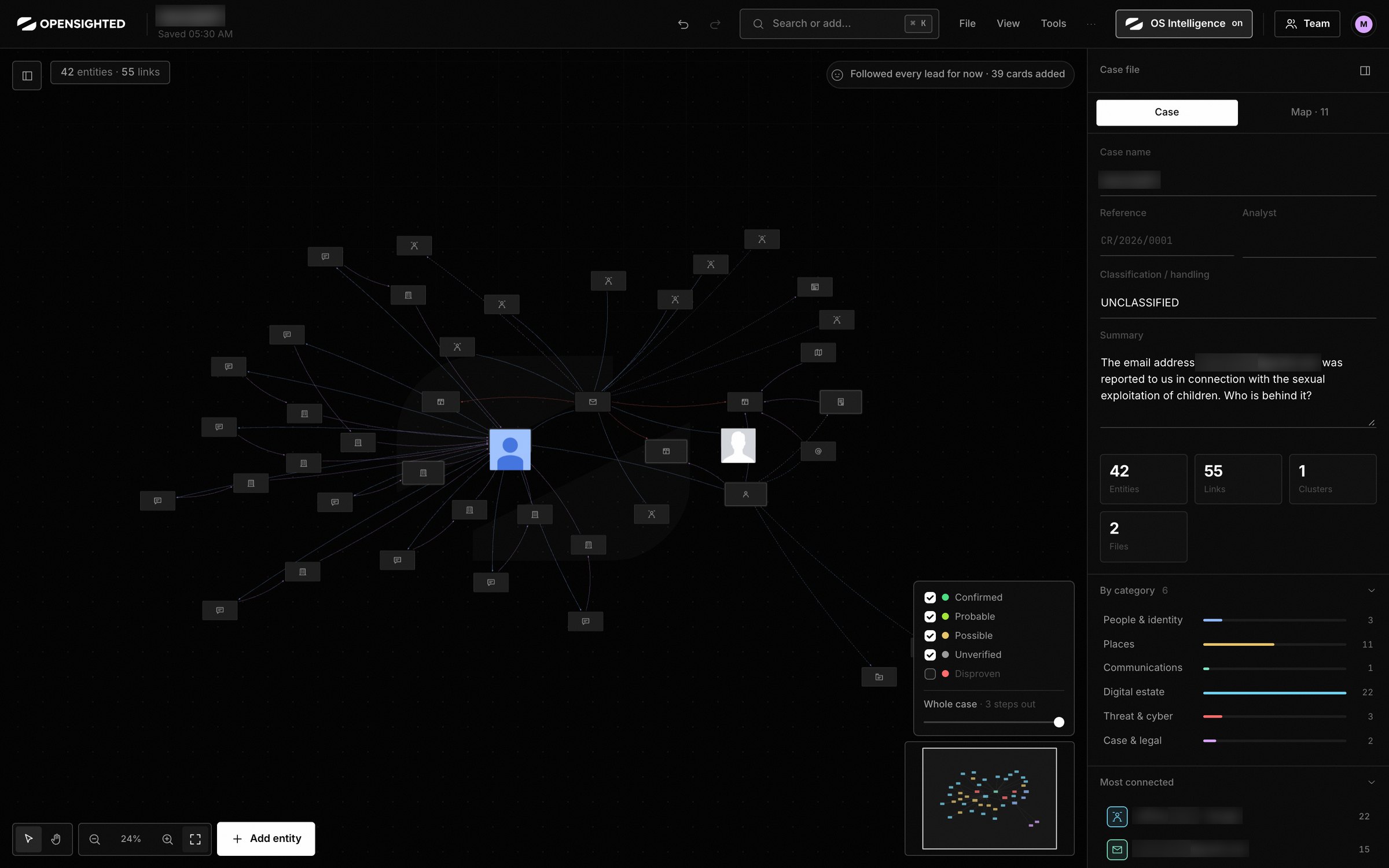
The case context was one sentence: the address, and that it had been reported in connection with the sexual exploitation of children. The board made two cards from it, the email address and the report, and Seer started on the address.
What the address was attached to
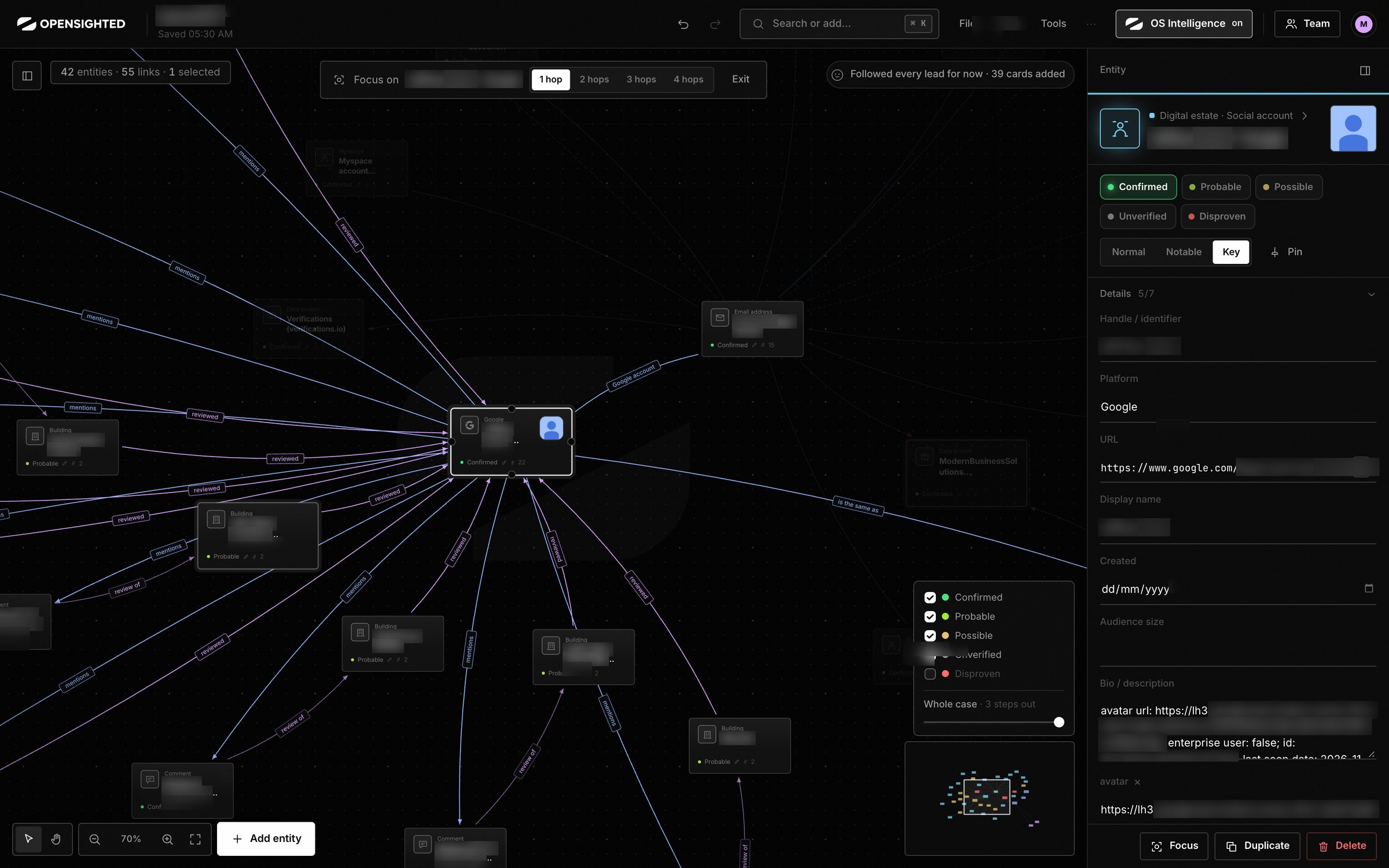
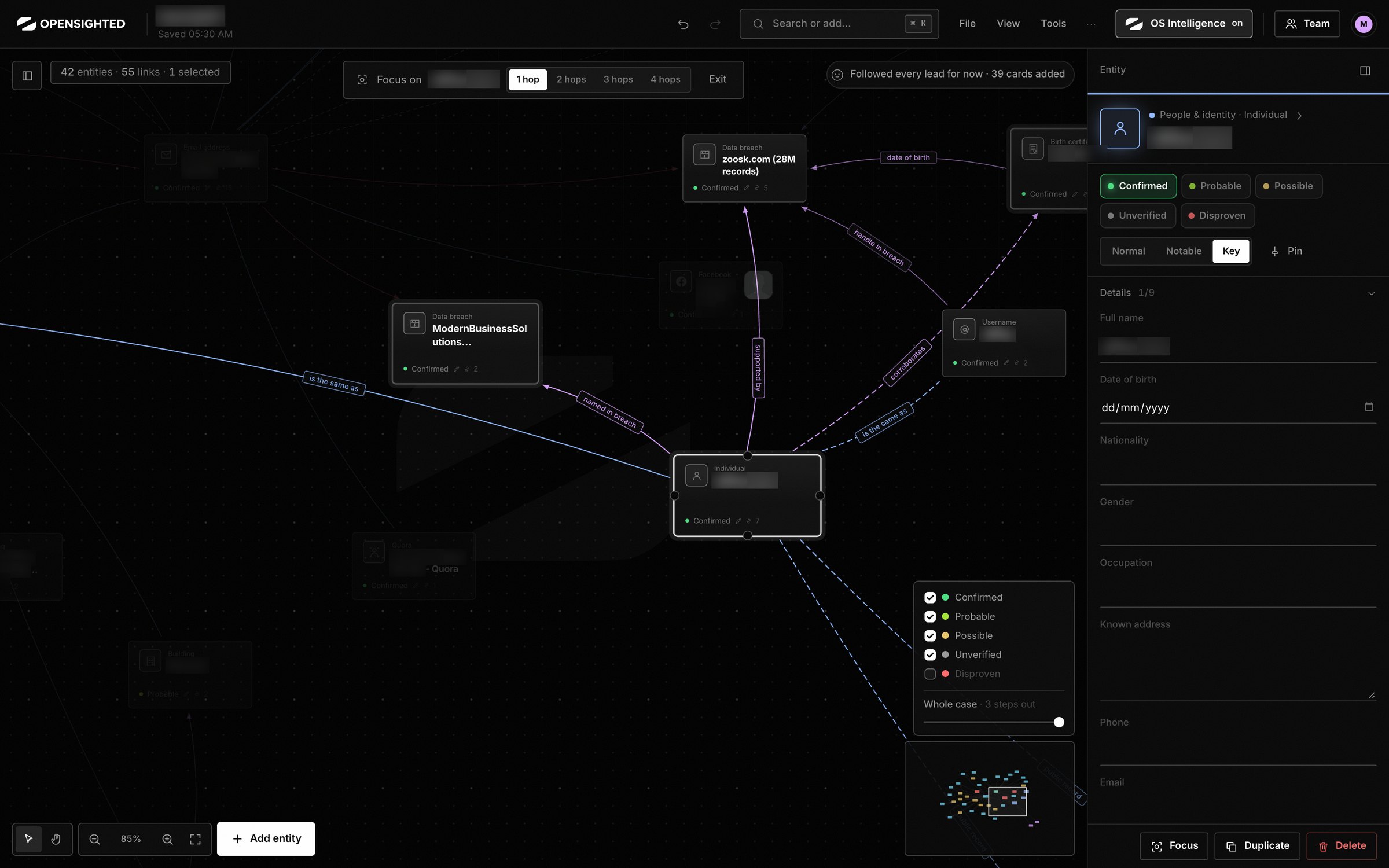
Seer started with the address's footprint. It found three breaches that held it: the 2020 breach of the dating site Zoosk, the Verifications.io leak and the ModernBusinessSolutions leak. It confirmed accounts registered to the address on Google, Facebook, Quora, Zoom, The New York Times, CVS, Myspace and X. Each is a card with the source that proved it, wired to the address.
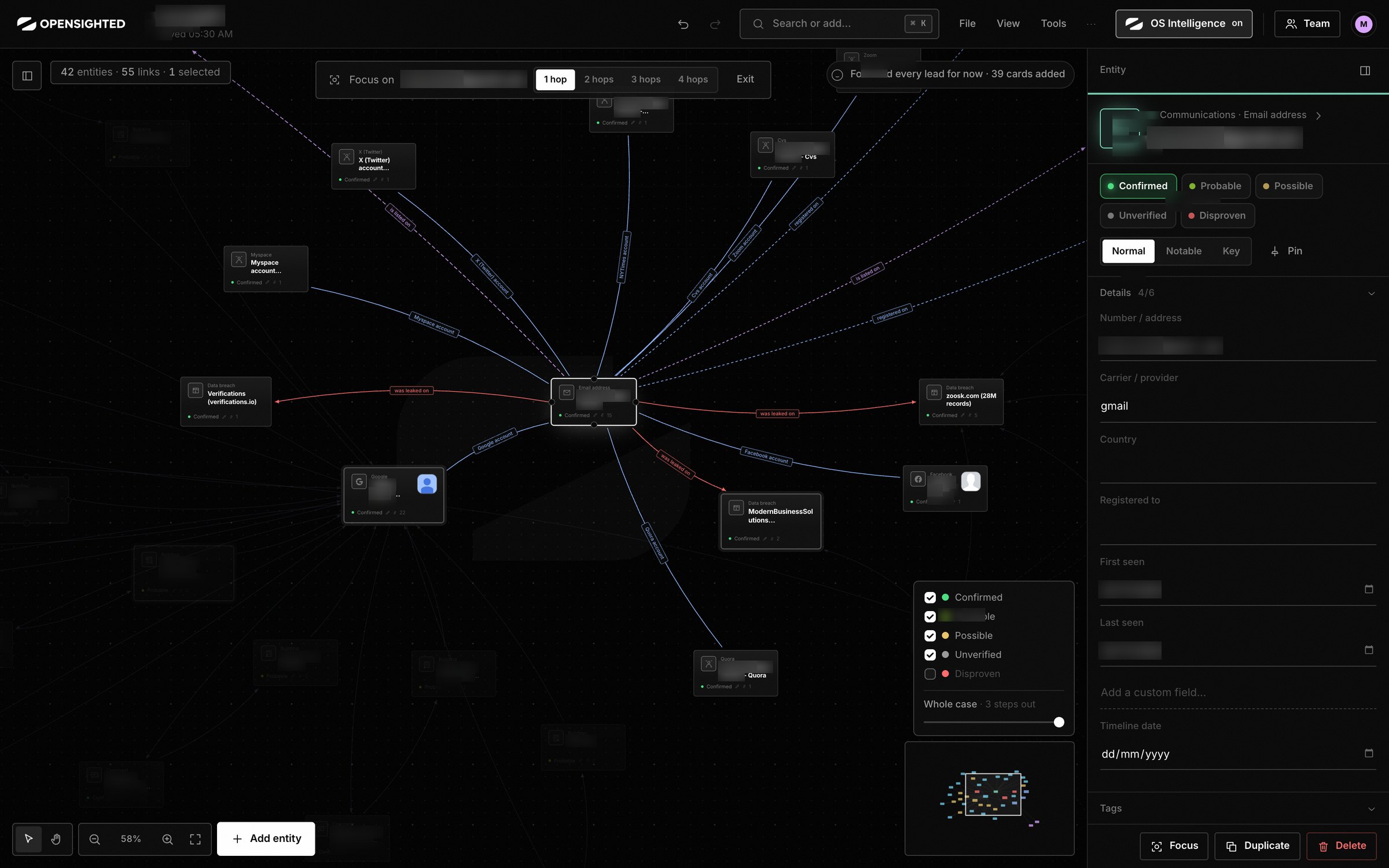
A name, a birth date and a place
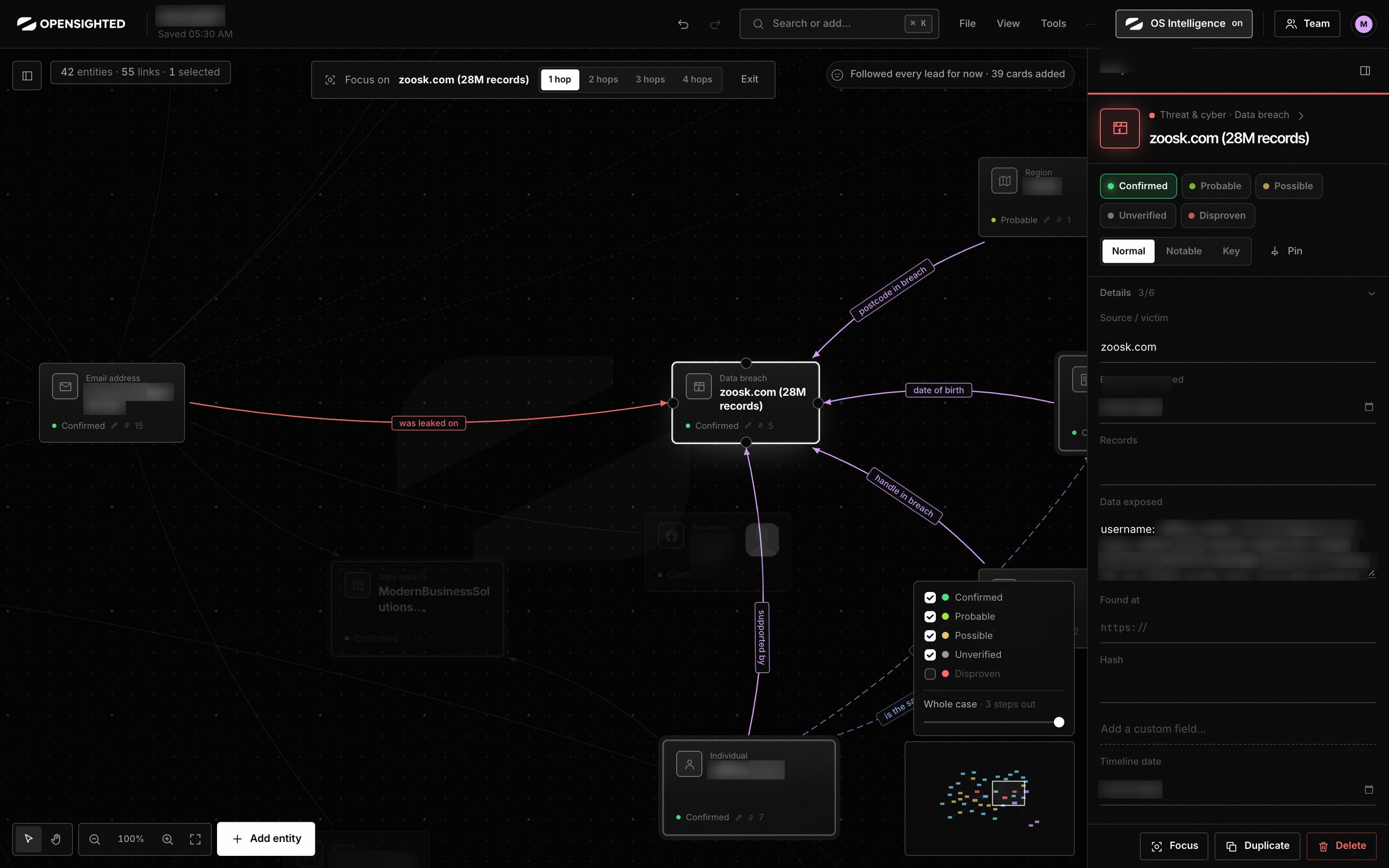
The breaches are where an address turns into a person. The Zoosk row for this address carried a username, a full name, a date of birth, a ZIP code and the date the profile was made in 2017. The same full name appeared beside the address in the two other breaches, so Seer graded the name confirmed: three independent sources, all naming the same person.
The date of birth and the ZIP code became cards of their own, each wired to the breach that held it.